
Why Preventive Electrical Diagnostics, Equipment Maintenance and System Inspections Are Critical to Modern Energy Infrastructure
In today’s industrial and energy environment, the reliability of electrical power systems is essential for ensuring operational continuity, equipment safety, and optimized operational costs.
Whether it concerns substations for industrial facilities, energy infrastructure, photovoltaic parks, or battery energy storage systems (BESS), even a short-term power interruption or electrical system failure can lead to significant financial losses, operational delays, and disruption of critical processes.
This is precisely why preventive electrical diagnostics and maintenance are increasingly viewed not merely as a technical necessity, but as a strategic approach to managing modern energy infrastructure.
What Are Preventive Electrical Diagnostics and Maintenance?
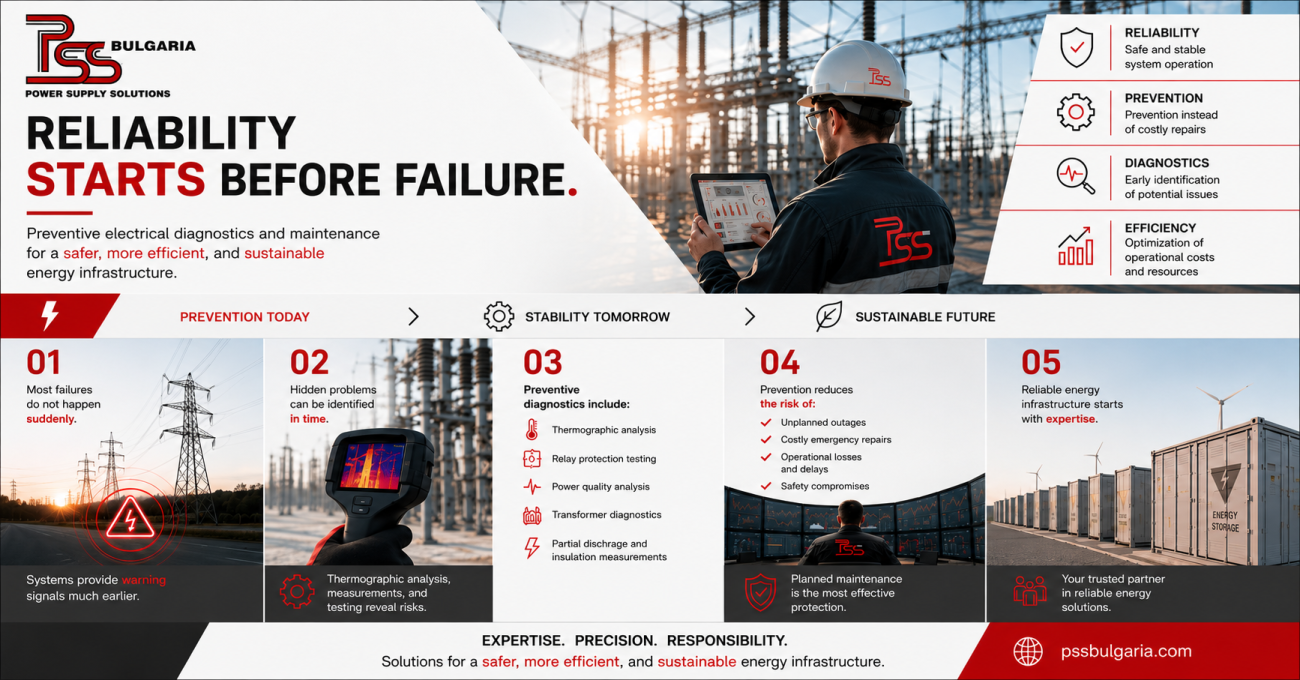
Preventive electrical diagnostics and maintenance involve a комплексive process of measurements, testing, analysis, and inspections aimed at identifying potential issues in electrical systems before they develop into failures or major incidents.
This type of diagnostics enables:
- detection of hidden defects;
- monitoring of equipment condition;
- analysis of operational parameters;
- assessment of future failure risks;
- planning of timely maintenance activities.
Among the most commonly applied methods are:
- thermographic analysis;
- electrical parameter measurements;
- relay protection testing;
- power quality analysis;
- transformer and electrical equipment diagnostics;
- partial discharge measurements and insulation condition analysis.
Why Is Prevention More Effective Than Reaction?
In the energy sector, emergency repairs are almost always associated with:
- higher operational costs;
- unplanned shutdowns;
- production and operational losses;
- safety risks for personnel;
- delays in project execution and delivery timelines.
In many cases, electrical systems provide clear warning signs long before an actual failure occurs. Elevated temperatures, voltage instability, harmonic disturbances, or deteriorating equipment performance often remain undetected without professional diagnostics.
A preventive approach combined with regular maintenance allows these risks to be identified at an early stage and addressed before a critical issue arises.
Key Benefits for Businesses
1.Reduced Unplanned Downtime
One of the most serious consequences of electrical infrastructure failure is the interruption of operational processes. Through regular diagnostics and preventive maintenance, companies can significantly reduce the risk of unexpected outages and downtime.
2.Extended Equipment Lifespan
Timely identification of issues enables optimal operation of electrical equipment and extends the overall lifecycle of critical infrastructure assets.
3.Improved Safety
Electrical failures can pose serious risks to both infrastructure and personnel. Regular diagnostics and maintenance contribute to a safer working environment and minimize the likelihood of incidents.
4.Cost Optimization
Planned maintenance is considerably more cost-effective than emergency repairs and unexpected operational losses.
5.Higher Energy Efficiency
Power quality analysis and monitoring of electrical parameters enable optimization of energy consumption and improve the efficiency of energy systems.
The Growing Role of Intelligent Diagnostics
With the advancement of energy automation and digitalization, intelligent monitoring systems and predictive maintenance solutions are playing an increasingly important role in the energy sector.
Modern technologies enable:
- real-time continuous monitoring;
- automated data analysis;
- early detection of irregularities;
- prediction of potential failures;
- more efficient maintenance planning.
This is transforming the way companies manage their energy infrastructure — shifting from a reactive to a proactive operational model.
Reliable Energy Infrastructure Starts with Expertise
As demands for industrial reliability, energy efficiency, and sustainability continue to grow, preventive electrical diagnostics and maintenance are becoming a critical strategic tool for businesses and infrastructure operators.
Investing in timely analysis, monitoring, and professional maintenance not only reduces the risk of failures, but also supports the long-term sustainability, reliability, and efficiency of energy systems.
At PSS Bulgaria, we believe that reliable energy infrastructure is built through engineering expertise, precision, and a proactive approach to every system and process.