
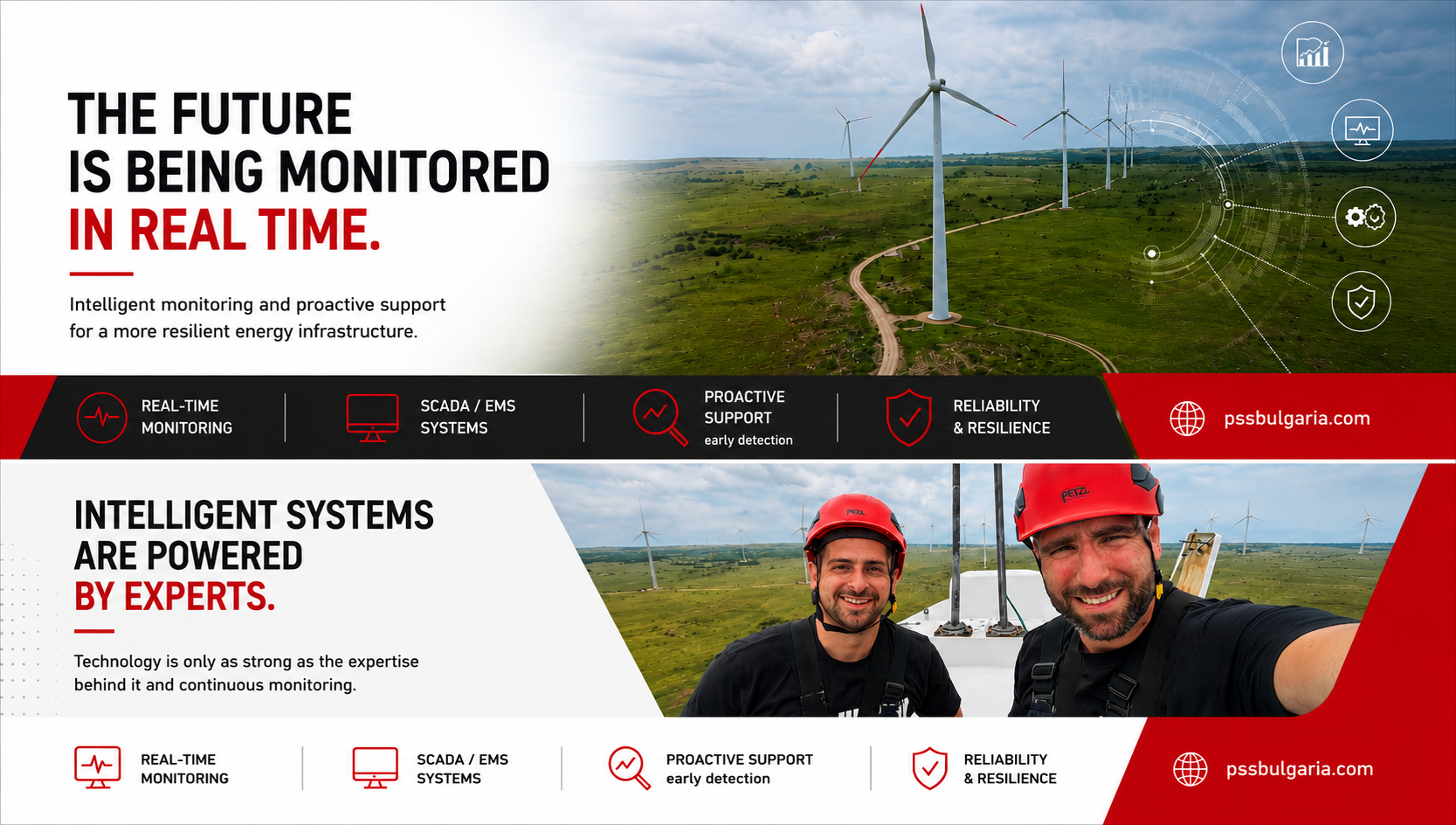
Power infrastructure is undergoing a significant technological transformation.
Growing demands for power supply reliability, system resilience and operational efficiency are setting new standards for the management of electrical substations, overhead and underground power lines, and energy facilities.
Today, the traditional reactive approach to asset operation is gradually being replaced by intelligent monitoring systems, automation and predictive maintenance solutions that enable enhanced control, early detection of anomalies and more efficient planning of maintenance activities.
This is the future of modern power infrastructure — connected, predictable and managed in real time.
From Reactive to Proactive Maintenance
For many years, the management of power assets was largely based on responding to failures after they occurred.
This approach often results in:
- unplanned outages;
- increased operating costs;
- higher risk of emergency situations;
- reduced service life of critical equipment.
With the adoption of intelligent monitoring systems and automated data analysis, maintenance is increasingly becoming a proactive process.
Real-time data enables operators to identify potential issues before they develop into serious technical problems.
What Are Smart Energy Systems?
Smart energy systems integrate digital technologies, automation and advanced analytics to monitor and manage power infrastructure.
These systems enable:
- continuous monitoring of critical parameters;
- remote supervision and control;
- equipment condition assessment;
- automatic alarm and event notifications;
- optimisation of operating regimes;
- more accurate maintenance planning.
As a result, operators gain significantly greater visibility into the condition and performance of substations, power networks and associated assets.
SCADA and EMS Systems as a Reliability Enabler
Predictive maintenance is fundamentally changing the way electrical equipment is maintained.
Rather than relying on fixed maintenance schedules or responding after a failure occurs, this approach uses real-time operational data and advanced analytics to predict potential equipment issues before they happen.
Key benefits include:
- more accurate maintenance planning;
- reduced emergency interventions;
- improved utilisation of technical resources;
- extended equipment lifecycle;
- optimisation of maintenance costs.
The Role of Real-Time Monitoring
Continuous monitoring is a core component of modern asset management.
Through intelligent monitoring systems, operators have constant access to information regarding:
- system loading conditions;
- temperature profiles;
- electrical parameters;
- protection system status;
- critical deviations and alarms.
This enables faster decision-making and more effective risk management.
Digitalisation and the Future of Electrical Substations
Modern substations are increasingly evolving into digitally managed energy hubs.
The integration of:
- automation technologies;
- SCADA and EMS systems;
- remote monitoring solutions;
- advanced analytics platforms;
- predictive diagnostics;
creates a completely new approach to managing power infrastructure.
This model is:
✔ more reliable
✔ more flexible
✔ more efficient
The Expertise Behind Intelligent Infrastructure
Technology alone is not enough.
The true value comes from expert analysis, accurate interpretation of operational data and timely technical decision-making.
At PSS Bulgaria, intelligent monitoring, automation, preventive maintenance and the management of electrical substations and power networks are integral parts of a comprehensive approach to building reliable and sustainable power infrastructure.
Through operations, maintenance and monitoring of energy assets, PSS applies a proactive model that minimises risk, optimises performance and ensures long-term reliability.
The Future Is Already Here
The future of power infrastructure is not defined solely by new technologies.
It is defined by the way these technologies are implemented through expertise, precision and a strategic approach to managing power systems.
Intelligent monitoring, automation and proactive maintenance are no longer a vision of the future.
They are the standard that is shaping the reliability, security and sustainability of power infrastructure today.