
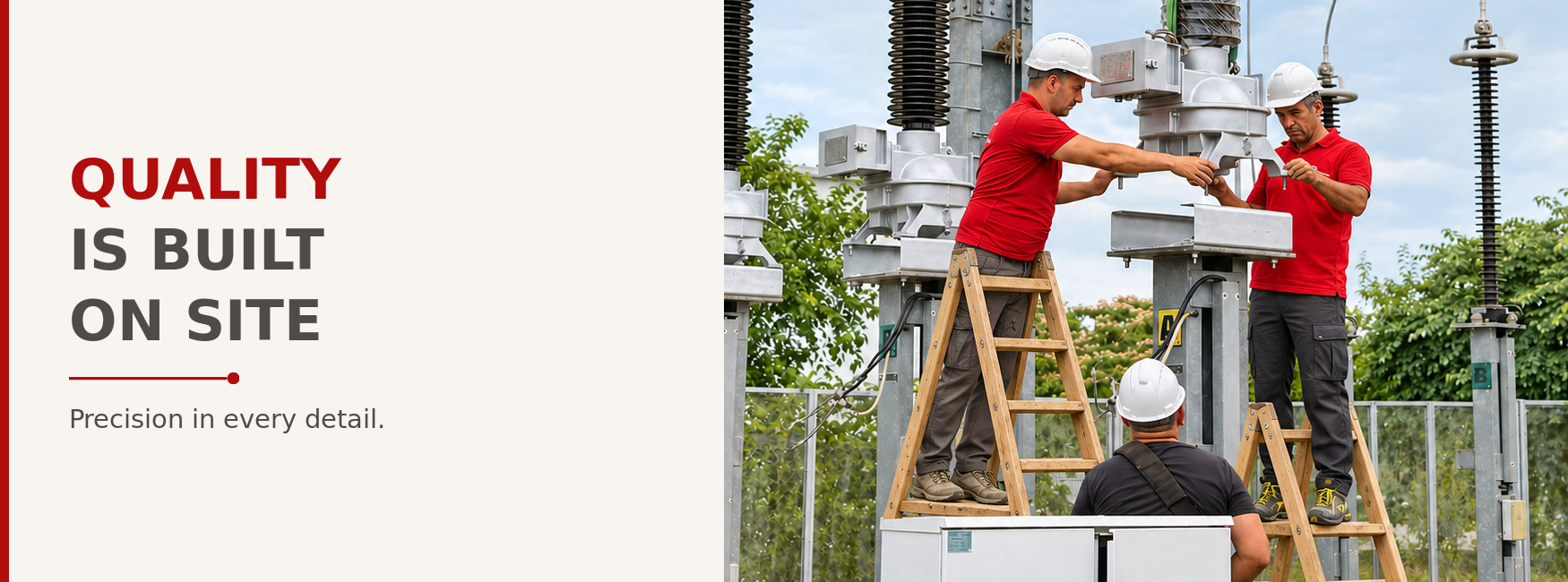
Behind every commissioned substation are people whose work remains part of the installation long after construction is complete. Their contribution is visible in the quality of the connections, the orderly cable routes, the clear labelling and the care taken to meet the design requirements. A qualified electrical installation team plays a key role in turning an engineering design into infrastructure ready for testing and operation.
For the project owner, good workmanship lays the foundation for reliable operation and makes equipment easier to maintain. For the people on site, it means taking responsibility every day for their own safety, for their colleagues and for the teams that will work on the installation after them.
From Design to Installation
Electrical installation brings the design documentation together with the conditions on site. The work requires technical knowledge, practical skills and an understanding of what each piece of equipment does and how it connects to the rest of the system.
Installing equipment, laying and terminating cables, installing earthing systems and wiring secondary circuits each come with specific requirements. The scope depends on the project and the equipment. Across all these activities, the work must follow the design documentation, applicable rules and manufacturers’ instructions.
Training and qualifications help installers see how their task fits into the wider project. They also help them recognise when site conditions call for clarification and seek an agreed solution before proceeding.
The Details That Matter After Installation
Some signs of good workmanship are immediately visible: orderly cable routes, legible labels and neatly arranged secondary wiring. Others require traceability and verification, including whether the installation matches the design, whether equipment has been installed correctly and whether specific manufacturer requirements have been met.
Accurate labelling of cables, individual cores and internal connections helps during testing and subsequent maintenance. A well-executed cable route makes it easier to identify and access cables. Careful termination supports reliable operation, while recording agreed changes in the documentation gives the teams that follow an accurate account of the installation.
Each of these details serves a practical purpose. Together, they reflect the team’s standards and its consideration for the people who will take responsibility for operating the equipment.
Experience Helps Installers Ask the Right Questions
Site work calls for a keen eye. A discrepancy between the drawings and actual site conditions, restricted access or an unclear installation detail may need to be resolved with the engineer responsible.
An experienced installer can spot the issue, describe it clearly and raise it with the right person before it delays the work. Any changes should be agreed through the project’s established process. That keeps the engineering design, the installation and the documentation aligned.
Professional judgement includes knowing when to ask a question and taking responsibility for stopping a task when there is uncertainty or a risk. Everyone on the team has a role in supporting that decision.
Quality Depends on Coordination
An energy infrastructure project brings together specialists with different responsibilities. The electrical installation team works alongside the people responsible for design, construction management, procurement, inspection and commissioning.
Sharing information promptly helps these teams carry out their work in the right sequence. Installers need clear instructions, current documentation and a way to resolve questions. Test teams need to be able to verify what was installed and know what changed.
Completing the installation prepares the equipment for the next stage. The specified inspections and tests establish whether it is ready to enter service. Good coordination makes the handover smoother and helps teams address any issues identified during testing.
Skills Are Passed On Through Everyday Work
Installers build their expertise through training, hands-on practice and working alongside more experienced colleagues. New equipment and differing site conditions mean there is always something to learn, even for those with years of experience.
It makes a difference when a colleague takes the time to explain why a task is done a particular way, what needs to be checked and when to ask for help. Those conversations pass on technical knowledge, good working habits and a sense of responsibility.
That takes planning, time for training and a working environment where asking questions is part of the job. Consistent quality also depends on giving people the conditions they need to put their skills to use.
Recognising the People on Site
Working on energy infrastructure projects often means travelling, adapting to changing conditions and spending time away from home. The people doing this work have lives and family commitments outside the job. Recognising their contribution starts with understanding what site work asks of them.
At PSS Bulgaria, we value the expertise, precision and sense of responsibility our electrical installation teams bring to our projects. Their experience is an integral part of our engineering capability.
Thank you to our colleagues on site for the care you take with the details, the knowledge you share and the support you give one another. Your workmanship continues to show in the installations you leave behind.